
Why So Many People Postpone Colorectal Cancer Screening
Despite the availability of effective screening methods, many eligible people avoid cancer screening – even when simple test options are available. The reasons are rarely medical, but psychological. People often feel healthy and see no urgent need to act. Others hesitate [1] because they are scared and worry about what the result might show [2]. Screening is rarely rejected – it is simply postponed. These hesitations are very unfortunate, especially in the case of colorectal cancer. The disease usually develops slowly, which means it can often be detected early, and in many cases, even prevent colon cancer from developing.
Making Colon Cancer Visible Is The First Step
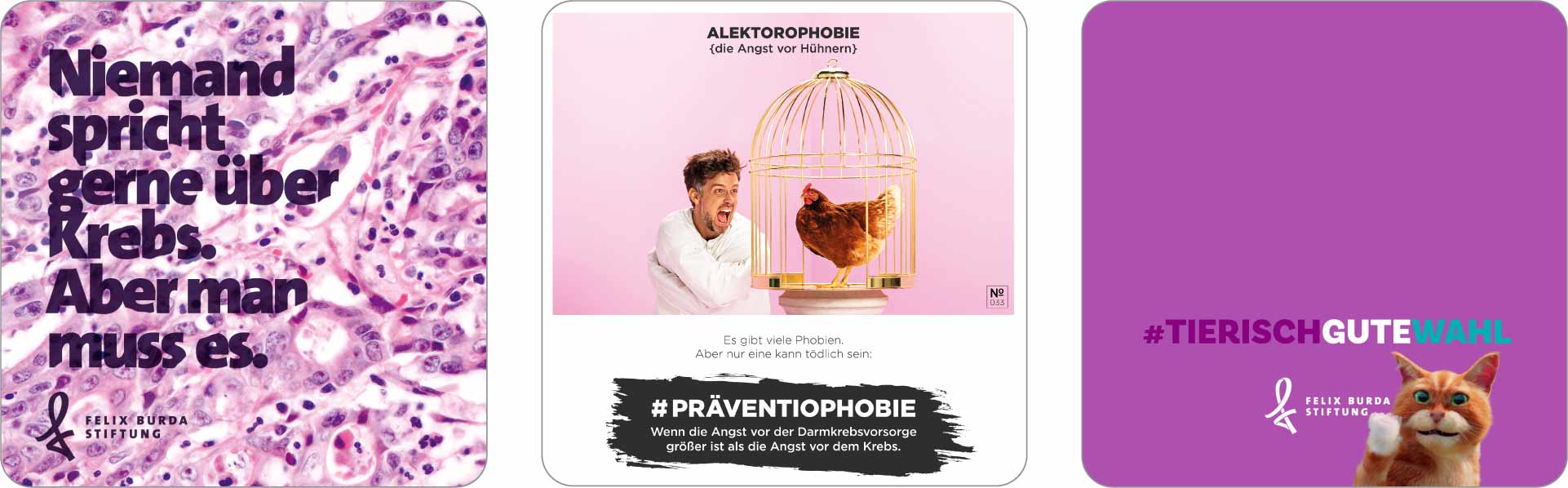
Awareness plays a critical role in colon cancer prevention. As one of Germany’s leading nonprofit organizations dedicated to colorectal cancer prevention, the Felix Burda Stiftung has spent more than two decades addressing exactly this challenge. Through award-winning public awareness campaigns such as #TierischGuteWahl – which received multiple Gold awards at the Healthcare Advertising Awards in Atlanta – and innovative educational tools like a walkable model of the intestines, the foundation has transformed how colorectal cancer prevention is communicated to the public.
The model of the intestines, a walk-through inflatable colon model, allows people to visually and physically experience how colorectal cancer develops and how it can be detected early. By making an invisible disease visible, the model helps reduce fear, clarify misconceptions, and create a personal connection to prevention. This approach has proven very effective in workplace health programs within occupational health.

Turning Education into Immediate Action
An initiative in Darmstadt, Germany in which Preventis was part of demonstrates how awareness and accessible screening tests turns prevention into action. Over the course of two days, the model of the intestines of Felix Burda Stiftung was installed on campus, giving people the opportunity to engage with colorectal cancer prevention interactively by walking through the intestines. The model sparked conversations, answered questions, and helped people better understand their risk and the importance of early detection. Preventis provided people with the stool test for colon cancer screening – allowing them to take immediate action following this educational experience.
How Often Does a Positive FIT Test Actually Mean Cancer?
In a U.S. study involving more than 70,000 participants, only about 3% of participants with a positive FIT test result were diagnosed with colorectal cancer. In other words: a positive FIT test usually does not mean cancer – it means that blood was detected in the stool, and that should be checked more closely. What matters most is the next step, which is a follow-up colonoscopy in good time. A short delay often doesn’t change much. The U.S. study suggests that a colonoscopy should ideally be performed within the next 9 months after a positive FIT result. In the study, the risk of colorectal cancer increased when the examination was delayed by more than 10 months [2].
Clear communication about these numbers and what a positive result really means is crucial – and too often it fails. That’s not good, because when people understand what’s happening in the gut, what a positive stool test result means, and that follow-up examinations offer effective treatment options, they feel safer and are more likely to take part in early detection.
You can read more about how stool tests and colonoscopy work together in colorectal cancer screening here: Stool Tests and Colonoscopy Explained.

Getting More People to Take Part in Screening
Preventis addresses two essential components of effective prevention: creating awareness through educating the public on screening, and making preventive measures accessible. This is important because awareness about the key facts reduces fear while motivating people to take the first step. The accessibility of stool tests provides a clear and immediate pathway for people to actually screen.
About Preventis
As a German diagnostics company with scientific roots in laboratory diagnostics, Preventis develops stool-based screening solutions designed to make colorectal cancer screening more accessible. These solutions allow individuals to perform screening conveniently and privately at home, reducing logistical and psychological barriers.