
In Europe alone, a total of 24.5 % of pregnant women are anemic
Iron deficiency is a common issue during pregnancy and can have serious consequences for the health of both mother and unborn child [1]. Iron deficiency significantly increases the risk of developing a consequential iron deficiency anemia [2]. Timely and regular monitoring is essential to protect the health of your client and the baby, to minimize risks like [3] [10]
- preterm birth
- low term weight
- and postpartum infections [1] [2] [5].
Why Iron is Important During Pregnancy
Due to the growth of the baby, uterus, and placenta during pregnancy, the body’s need for iron nearly doubles. This increased demand significantly raises the risk of developing iron deficiency anemia. In Germany for example a total of 48% of pregnant women have an iron deficiency. 9% of them develop a consequential anemia [1] [2]. Anemia is a condition, where the number of red blood cells, mainly consisting of hemoglobin, is significantly reduced.
During prenatal checkups, iron status is often assessed using hemoglobin alone - even though this only reflects iron deficiency at a late stage
Hemoglobin is an iron-rich protein that binds oxygen in the blood and transports it throug the body and every cell. Iron is what gives hemoglobin and red blood cells, its oxygen-binding capability. In fact, without iron hemoglobin can’t form itself [4]. In the state of anemia, less hemoglobin is produced leading to a reduced number of red blood cells and shortage of oxygen in the cells. This puts mother and child in a vulnerable condition. The leading cause is of course an adherent iron deficiency that has progressed [1].
TThe following symtpomts of iron deficiency may be observed during pregnancy even before anemia develops. They often emerge gradually making them easy to overlook:
- Fatigue and exhaustion
- Nausea and irritability
- Pale skin and constant coldness
- Headaches and dizziness
- Increased susceptibility to infections due to a weakened immune system
- Cracked mouth angles
- Hair loss and brittle nails
Ferritin Explained: The Key Marker for Prevention
During prenatal checkups the hemoglobin level (Hb value) is oftentimes the only value measured for iron deficiency prevention. They only decrease once iron stores are depleted though. If hemoglobin levels are too low, an adherent iron deficiency has already progressed into an anemia, making it an important deterministic, but not necessarily preventive marker. Oxygen levels in the blood already dropped [3].
Measuring low hemoglobin-levels means detecting a condition that needs immediate treatment in pregnancy. Low ferritin levels on the other hand indicate an iron deficiency long before the deficiency develops into anemia [3].
Don't Just Treat Anemia: Prevent it.
Ferritin is the protein that stores excess iron. Serum ferritin levels are directly related to the body’s iron status. The more iron is absorbed, the more ferritin does the body produce - and of course the other way around. This makes ferritin the key indicator in iron diagnostics and to prevent a deficiency from progressing into a poor red blood cell count.
Even though ferritin has been long known to be the key biomarker for early iron deficiency assessment, measuring ferritin levels is often not included in standard prenatal care up.
Measuring hemoglobin-levels during pregnancy - though necessary - doesn’t prevent anemia. Measuring ferritin levels as part of pre- and postnatal care does. It allows for preventive action that is vital to ensure a healthy pregnancy[3]. As a midwife or gynecologist quantitative point-of-care tests can help determine the status quickly and reliably
Efficient Detection of IDA
Preventing iron deficiency anaemia during pregnancy requires timely, reliable insight into iron stores. SmarTest Ferritin Pro is a quantitative rapid test that allows midwives, gynecologists and other healthcare professionals to measure ferritin levels directly at the point of care - with results comparable to laboratory testing.
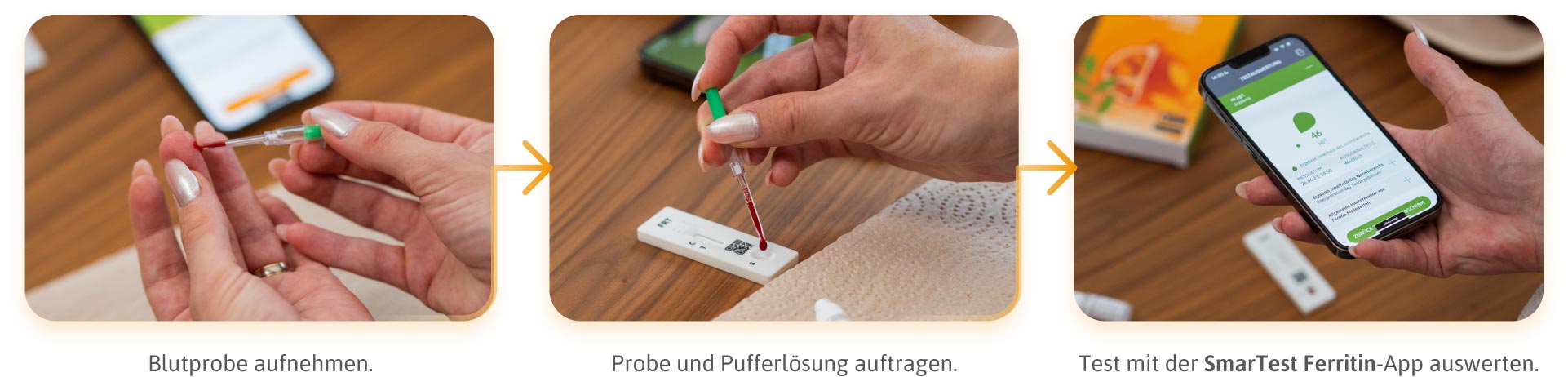
The test combines a rapid test kit with the SmarTest app (free of charge), which turns a smartphone into a calibrated lab reader. After just 15 minutes, the test strip is scanned via the smartphone camera and evaluated digitally, enabling immediate interpretation and follow-up consultation — without lab send-ins, waiting times, or additional appointments.
For continued monitoring, pregnant women can also test at home using SmarTest Ferritin Home. With patient consent, results can be securely shared via the Preventis Patient Portal, allowing healthcare professionals to review values remotely and support telemedical care. This enables follow-up consultations and treatment adjustments to be based on up-to-date diagnostic data — even without an in-person visit.
How the Point-of-Care Test Works
SmarTest Ferritin Pro fits seamlessly into everyday practice. After performing the rapid test, the smartphone app analyses the color intensity of the test strip over the smartphone-camera to deliver a quantitative ferritin result within 15 minutes - no lab send-in required.
Prevention is Key
Vitamin D levels are also crucial for a healthy pregnancy. Sufficient Vitamin D is essential for the child’s bone development and brain growth[8] [9]. A deficiency can lead to preeclampsia or gestational diabetes. Monitor your pregnant clients Vitamin D levels [7].
Iron deficiency during pregnancy is a serious but largely preventable condition.
For midwives and gynecologists, regular monitoring of ferritin levels enables early intervention and helps protect pregnant patients from iron deficiency and iron deficiency anaemia. SmarTest Ferritin provides a practical, quantitative solution for ferritin testing — supporting timely clinical decisions directly at the point of care or through connected follow-up.
Vitamin D status also plays an important role in a healthy pregnancy. Adequate Vitamin D levels are essential for fetal bone development and brain growth [8][9], while deficiency has been associated with pregnancy complications such as preeclampsia and gestational diabetes [7]. Identify deficiencies early...