Iron Requirement Almost Doubles During Pregnancy
Iron deficiency anemia poses a serious health risk in pregnancy that many underestimate. According to the World Health Organization (WHO) a total of 24.5% of pregnant women in Europe develop iron deficiency anemia[10]. The main cause of iron deficiency anemia is a previously adherent deficiency that progressed [1]. Low ferritin levels (iron-storage) in pregnancies are to be avoided. Timely monitoring is crucial to mitigate the risks of anemic complications such as
- Preterm birth
- Low birth weight
- Slow growth and susceptibility to infections during infancy or early childhood[2]
- Postpartum maternal infections[3] and depression
In Pregnancy, The Body Needs Twice as Much Iron
Oxygen Transport Depends on Healthy Red Blood Cells
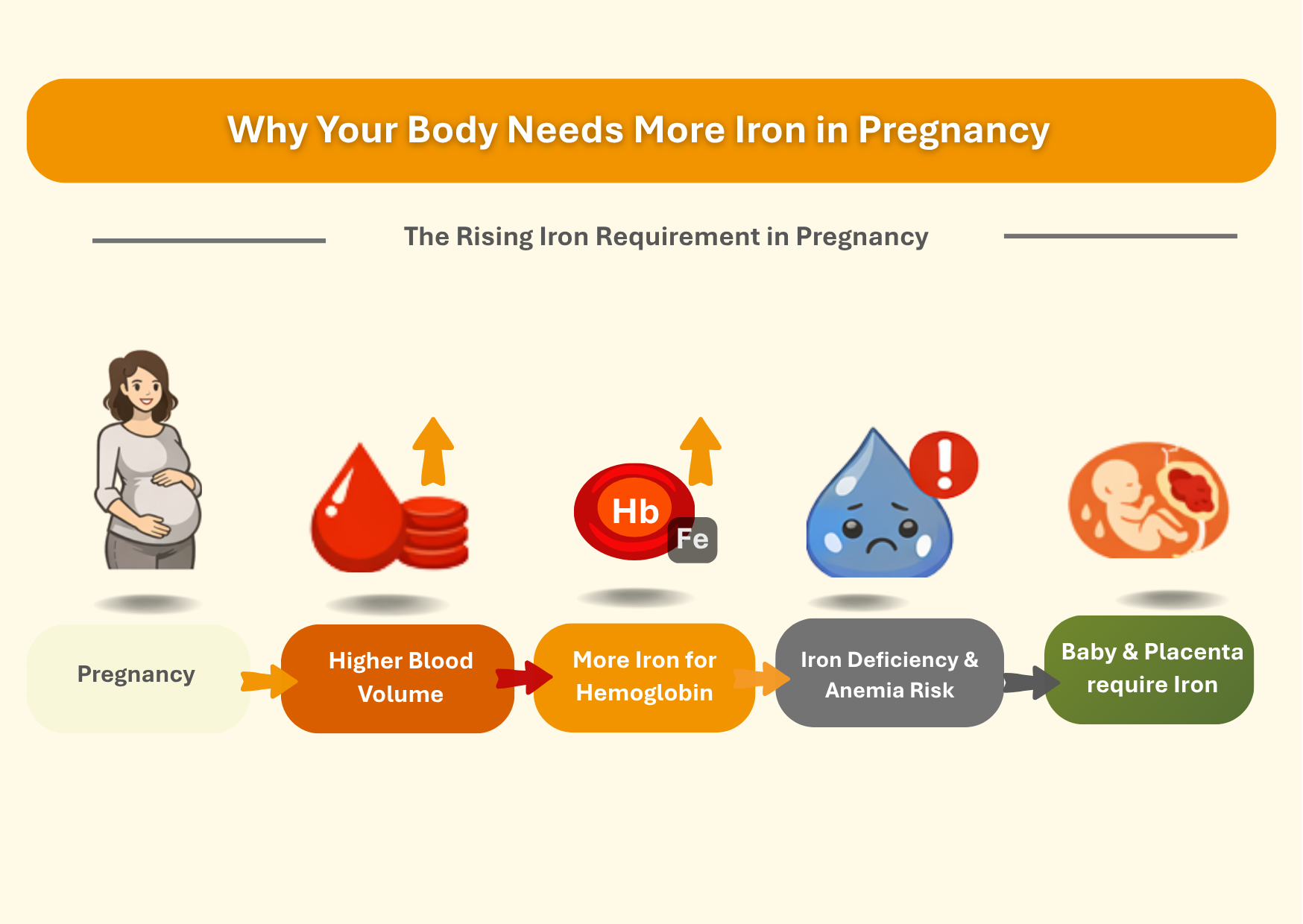
Iron plays a vital role in supplying the developing baby in the womb. This is because red blood cells mainly consist of the iron-rich protein hemoglobin, whose main function is to transport oxygen to all parts of your body. Needless to say, you and your baby need oxygen just like any living organism. Because your iron requirements double, it is essential to ensure a healthy dietary intake and control the iron-stores (ferritin) for anemia prevention [4].
Iron Is Essential To Get Oxygen Through Your Body...
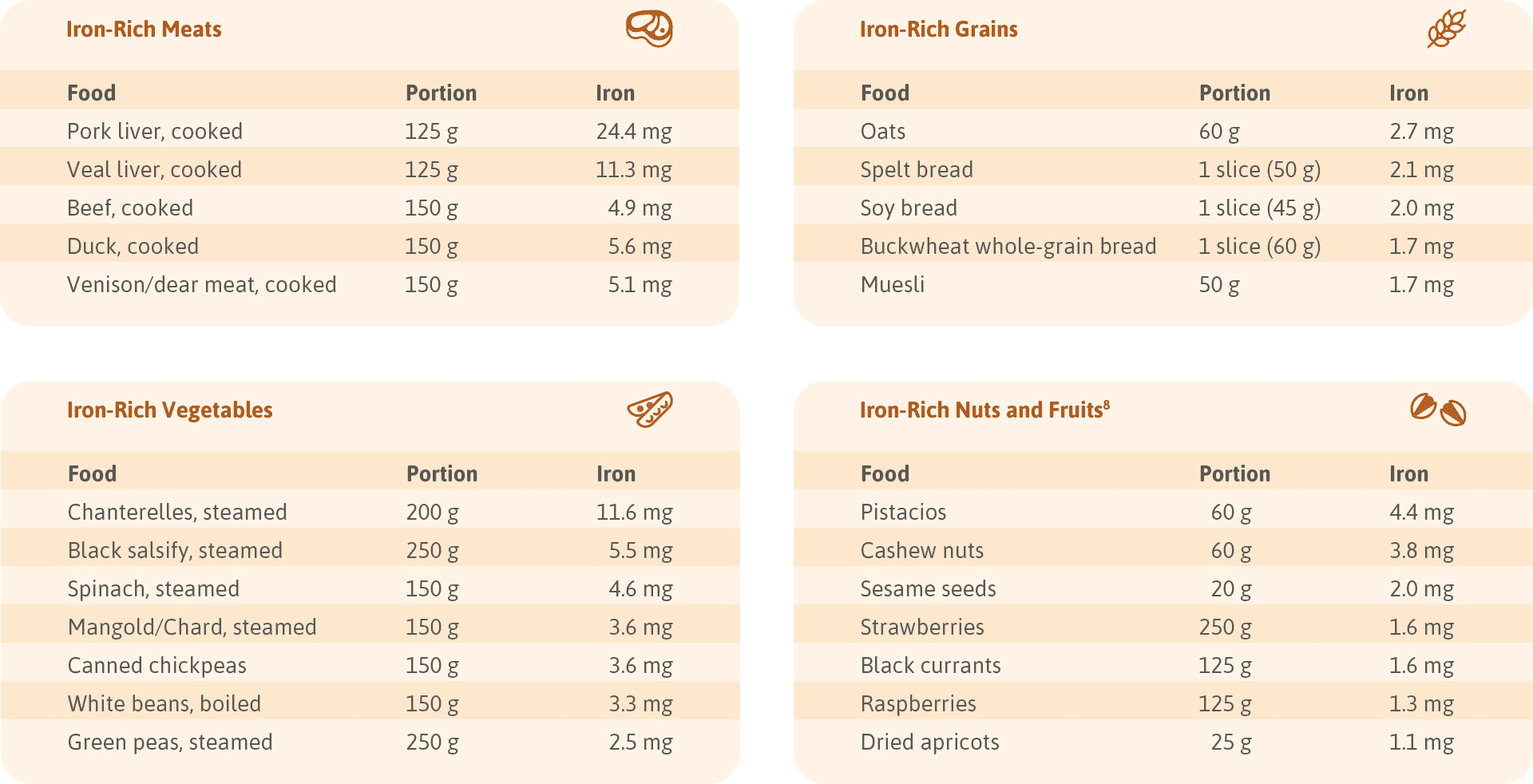
... and to your baby. Your body requires an extra volume of red blood cells for more oxygen to support the creation of life. Your body can't produce healthy red blood cells without the iron mineral. For instance, blood volume increases by about 50% when pregnant. Iron promotes the growth and development of cells and is key for the development of the fetus. Not only does your body require iron – your baby’s development is contingent on it. Your placenta and your baby need iron for cell growth. The further advanced you are in your pregnancy, the higher will be the demand (iron rich foods see table below ↓).
More often than not, the extra blood volume your body needs will make sure you have some savory cravings for meat, eggs or other iron-rich protein sources. Nevertheless, because of the increase in demand and lenient nutritional changes, pregnant women in the second and third trimester are especially at risk of developing an iron deficiency or consequential anemia[10].
Symptoms of Iron Deficiency Anemia in Pregnancy
Iron deficiency during pregnancy often develop gradually and may go unnoticed for some time. The low iron occurrence first develops into iron deficiency but both iron deficiency and anemia can cause similar symptoms:
- fatigue, exhaustion and nausea,
- pale skin and a feeling of coldness,
- headaches and dizziness,
- a weakened immune system,
- rhagades at the corner of the mouth,
- hair loss and brittle nails [4].
Ferritin Helps Identify Iron Deficiency at an Early Stage
During prenatal care, checking hemoglobin levels is often the only test performed. However, low hemoglobin levels only provide information about an already existing anemia. Determining low hemoglobin status means only to detect a condition that needs immediate correction in a pregnancy - not preventing one.[5]
Ferritin, also known as the iron storage protein, is a preventive marker. Your body stores iron in ferritin for moments of need. Think of ferritin as your body’s iron warehouse. When iron deficiency begins, your body will initially draw on these reserves. This will be reflected in your ferritin levels. Low ferritin indicates an iron deficiency, before it progresses into an anemia. When you are low on ferritin, you are iron deficient. If the deficiency persists, your iron stores will eventually deplete. That’s when your body starts producing less hemoglobin, and as a result less red blood cells. A deficiency has now progressed into anemia, disrupting oxygen and nutrient supply for you and your baby. Iron deficiency anemia can impair the development of the growing baby and is a serious risk[2].
Monitoring Iron Stores
Ferritin is the protein that stores excess iron. Unlike hemoglobin, serum ferritin levels are directly related to iron availability. By measuring ferritin levels, iron deficiency can be identified in its early stage, and you can take proactive measures in consultation with your doctor or midwife. Protect yourself from
- a potential anemia and its consequences,
- address iron deficiency in its early stages,
- keep your ferritin levels in check at all times.
Iron Requirements in Different Trimesters
Iron requirements increase drastically throughout pregnancy. Ideally, women should ensure their iron stores are fully replenished before pregnancy to prepare their bodies for the significant changes ahead[6]. Ferritin levels during pregnancy provide information about iron stores—values below 30 µg/L generally indicate low iron reserves [1].
1st Trimester: Iron requirements slightly decrease due to the absence of menstruation. However, iron remains crucial in the early stages of pregnancy to support the baby’s development.
2nd Trimester: Daily iron requirements increase significantly – up to four times higher than usual – due to the increase in blood volume and the baby’s rapid growth. According to the german doctor’s journal “Ärzteblatt”, a prophylactic oral supplement of 30–40 mg per day is recommended[5].
3rd Trimester: The highest iron levels are needed as the baby grows rapidly and the placenta needs to further support the growth. Additionally, the body must prepare for childbirth, which involves significant blood loss (about half a liter on average)[7]. If daily iron intake of 30–40 mg/day was covered in the 2nd trimester, a daily intake of 30–40 mg should remain sufficient[5].
Smartphone-Based Ferritin Test
Low ferritin levels indicate depleted iron stores and can reveal iron deficiency before anemia develops. Monitoring ferritin levels is therefore important, especially during pregnancy when iron requirements increase significantly. The smartphone-based ferritin test SmarTest® Ferritin Home offers a way to measure ferritin levels at home in less than 20 minutes using a rapid test kit and a mobile application called SmarTest® Ferritin . This allows users to obtain quantitative ferritin values and monitor their iron status over time, supporting early detection and informed discussions with healthcare professionals.
How To Test for Iron Deficiency At Home
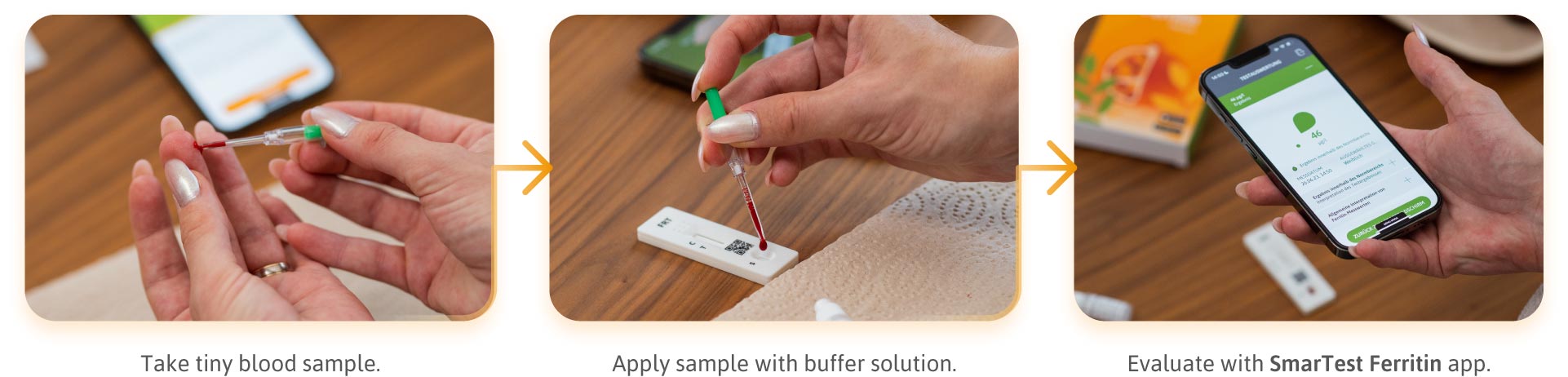
The smartphone-based ferritin blood test SmarTest® Ferritin Home is an iron deficiency test that consists of a rapid test kit and an app. The test delivers actual quantitative results that are comparable to the lab. The app functions as a lab-reader, analyzes the color intensity of the test strip and calculates a numerical value in an instant. Performing the test is similar to a COVID-19 rapid test, with the difference that after 15 minutes, the test strip must be scanned through the smartphone camera with the help of the app. Result appears inmediately on the phone and will be saved in the app so changes can be observed over time.
Iron-Rich Foods To Support Your Diet
Tip!
- Combine iron-rich foods with Vitamin-C-rich foods like citrus fruits or bell pepper.
- Vitamin C improves iron absorption. However, avoid coffee or tea with meals as they can inhibit absorption
Prevent Iron Deficiency – it's simple!
Regularly checking your ferritin levels during pregnancy is an efficient way to monitor your iron stores at home. Early detection allows you to consult your doctor or midwife proactively, adjusting treatment plans to meet your body’s needs and protecting your baby and yourself. Avoid an iron deficiency actively and prevent it from progressihng into an (iron deficiency) anemia.