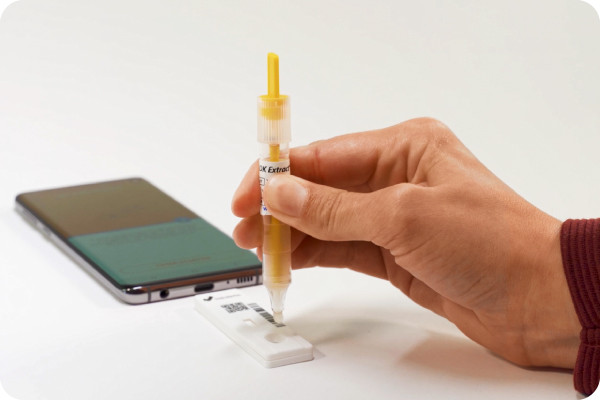
How FIT Tests Improve Colorectal Cancer Screening Pathways
Clorectal cancer is the third most common cancer worldwide accounting for 10% of all cancer cases. Early detection plays a crucial role in reducing mortality and improving patient outcomes through timely treatment [1]. Fecal immunochemical tests (FIT tests) offer a low-threshold way to identify at-risk patients and refer them for colonoscopy in a targeted manner.
A Systematic Pathway to Targeted Colonoscopy
Colorectal cancer detected at an early stage has a significantly better prognosis than cases diagnosed at later stages [2]. Non-invasive screening methods such as FIT tests provide a low-threshold way to identify high-risk patients early and refer them for colonoscopy [2]. Studies also show that organized, population-based colorectal cancer screening using FIT testing saves a substantial number of lives and reduces mortality by 30%. Using FIT Tests as the first screening tool allows more cases to be detected at an early stage and therefore helps save more lives [3].
They offer several advantages:
- Easy to use – no special preparation required
- Higher acceptance – especially among patients who are reluctant to undergo colonoscopy
- Fast, non-invasive early detection with minimal effort for both patients and physicians
- Targeted referral to colonoscopy through precise diagnostics
- Effective monitoring of at-risk patients with minimal effort
An Effective Pathway with High Patient Acceptance
FIT tests detect human hemoglobin in stool and do not interact with food. This means that no bowel preparation is needed. The test can be performed direclty whjch makes testing easy for both patient and healthcare professional. FIT Test support an initial assessment and therefore represent the first step in an optimal stepwise diagnostic pathway, helping refer patients to colonoscopy in a targeted way [4]. In many countries, iFOBTs are already used as the preferred first screening method. This is also the case in the Netherlands, where participation rates in colorectal cancer screening are around 70%.
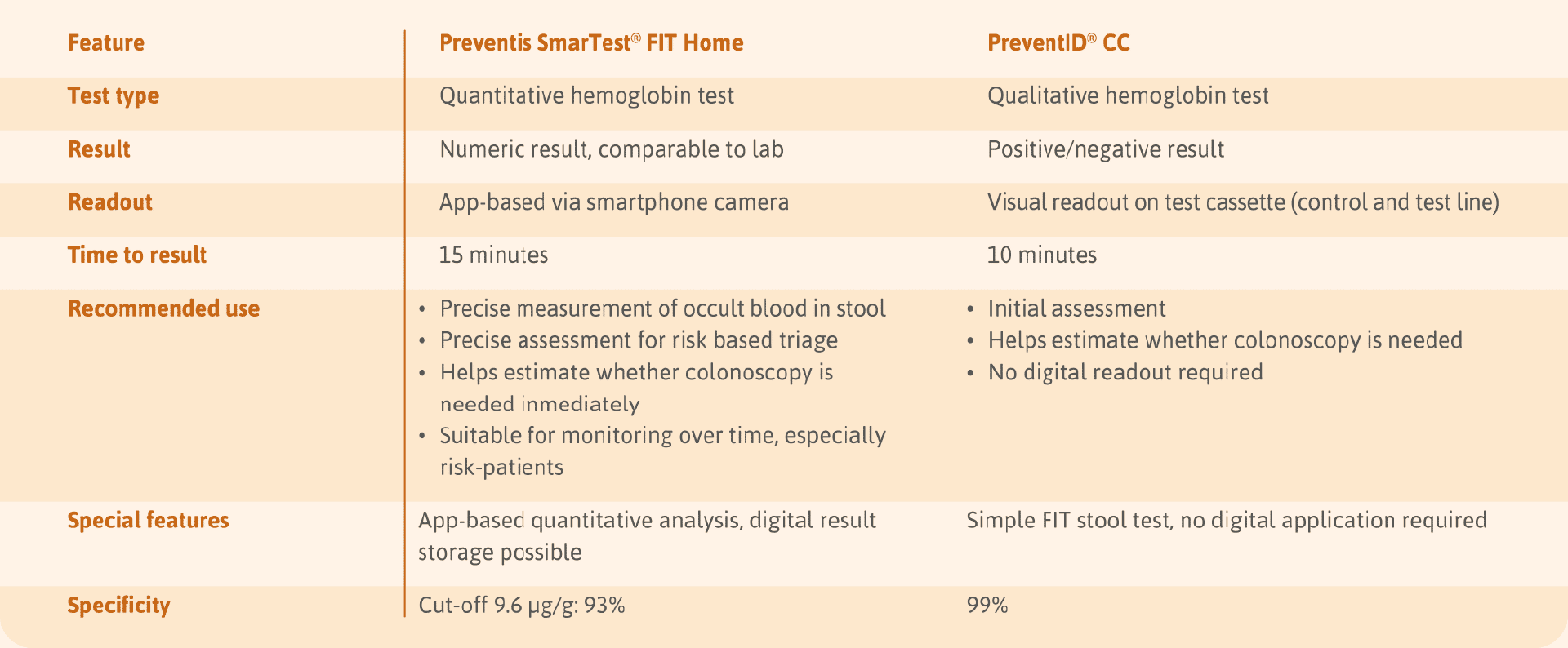
Comparison of a Smartphone-Based- vs. Conventional Stool Test
Why FIT Tests Improve Patient Care in Clinics and Doctor's Offices
In Clinics, Gastroenterological Deparments & Doctor's Offices
- Simple, regular testing of patients aged 50+, with a family history or increased risk
- A useful complement to colonoscopy in patients at moderate to high risk
- Monitoring of patients at moderate to high risk, or of those who do not require immediate colonoscopy
- Helps lower the barrier for patients and strengthen adherence to annual colorectal cancer screening
- Preserves privacy and improves accessibility
For Workplace Health Programmes (Occupational Health)
- Workplace colorectal cancer screening saves lives and is an active sign of care
- Low-threshold colorectal cancer screening offer for employees
- Higher acceptance of colorectal cancer screening due to simple handling and non-invasive testing
FIT Tests: This is How It Works
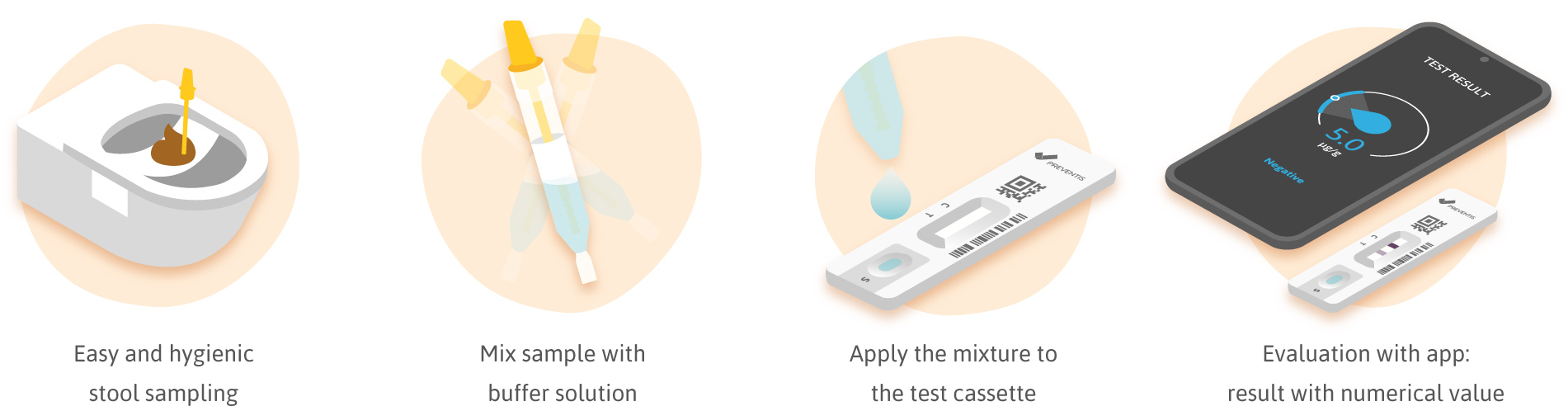
With the rapid tests Preventis SmarTest® FIT Home and PreventID® CC, a small stool sample is collected and placed into a sample solution, similar to a COVID-19 rapid test. The solution is then applied to the test cassette. With both tests, the result is evaluated using a rapid test procedure after 10 or 15 minutes respectively. With Preventis SmarTest® FIT Home, the result is evaluated quantitatively using the smartphone camera. Shown below: how the test is performed with Preventis SmarTest® FIT Home.
How to Choose the Right FIT Test for Your Office or Clinic
Both tests offer reliable options for non-invasive colorectal cancer screening and can help improve access to early detection. PreventID® CC provides a simple and fast qualitative result, making it a practical option for an initial assessment. Preventis SmarTest® FIT Home us also a simple and fast solution but adds quantitative measurement as part of a broader digital health approach. The analysis of the test strip is app-based, results are captured digitally result and there is always the possibility to integrate results into the Preventis patient portal or clinical system. Results can be shared with treating healthcare professionals and clinics for structured telemedical follow-up. This can be particularly valuable in settings where documentation, monitoring over time, and more targeted referral pathways and digital health dats play a greater role. The most suitable FIT test ultimately depends on the needs of the practice, the intended screening pathway, and the patient group being addressed.