Iron Deficiency and Hair Loss: What You can Do
Iron Deficiency is one of the most common deficiencies worldwide. It is essential for cell division and oxygen transport in the body. A deficiency can have serious health consequences, especially if it develops into iron deficiency anemia, which can cause hair loss [2].
Women are more commonly affected by iron deficiency due to blood loss from menstruation or pregnancy. However, men are also increasingly affected – primarily due to intense training or growth phases. Moreover, low ferritin levels in men exacerbates or accelerates the genetically predisposed hair loss and male pattern baldness widespread among men [1].
Why Iron Deficiency Worsens Hair Loss in Men
The most common form of hair loss in men is androgenetic alopecia (AGA), also known as hereditary hair loss or male pattern baldness. Androgenetic alopecia (AGA) occurs significantly more often in men than in women and becomes increasingly prevalent with age [8].
Studies show that signs of androgenetic alopecia are present in approximately:
- 30% of men over the age of 30,
- 40% of men in their mid-40s, and
- 50% of men over the age of 50 [9].
Over the course of a lifetime, it is estimated that up to 80% of men are affected by some degree of hair loss [8]. While androgenetic alopecia is primarily driven by genetic and hormonal factors, iron deficiency may further impair hair follicle function.
Iron is Key for Oxygen Supply and Cellular Health
Iron is a vital mineral required for the growth and proper function of the body’s cells. One of its most important roles is in the formation of red blood cells and the iron-rich protein, haemoglobin. to transport oxygen from the lungs to all cells of your body. If iron levels are low, your body receives less oxygen. Over time, this can affect how well your cells renew and regenerate, and a persistent deficiency may eventually lead to iron deficiency anaemia (IDA) [3][4].
When Your Iron Stores Deplete
Fortunately, your body does not rely solely on daily iron intake. Excess iron is stored in the form of ferritin, for moments of need, when iron demand increases or intake is temporirarely insufficient. Low ferritin levels indicate iron deficiency, signalling that iron stores are running low. Once they are depleted, anemia develops – meaning your cells receive less oxygen than they need.
Common Symptoms of Iron Deficiency
- Hair loss in both men and women
- Brittle nails
- Pale skin
- Tiredness due to lack of iron
- Dizziness/nausea
- Concentration difficulties
- Cold hands and feet
- A weakened immune system
- Hair and nails grow
- Reduced physical stamina- and performance
- Shortness of breath caused by anemia [4]
(Accelerated) Hair Loss Due to Iron Deficiency
Hair and nails grow continuously and depend on adequate iron availability for cell division and healthy growth. Hair follicles, in particular, are among the most metabolically active cells in the body and require a steady supply of iron to function properly.
Iron Deficiency Weakens Hair Follicles and Nails
When iron levels are low, the body prioritizes the supply of iron to organs that are essential for survival, such as the heart and brain. Your body will first withdraw available iron from “less important” body parts like hair and nails. This is why hair thinning, increased hair shedding, and brittle nails are often the first to suffer from a deficiency.
Low Ferritin Levels Cause Hair Thinning
Low ferritin levels – indicating depleted iron stores – and iron deficiency can contribute to hair thinning and are associated with the onset or progression of various forms of hair loss, including:
- Hereditary hair loss (androgenetic alopecia)
- Alopecia areata (patchy, circular hair loss)
- Telogen effluvium (premature transition of hair follicles into the resting phase)
- Diffuse hair loss (widespread thinning across the scalp)
- Alopecia totalis (loss of all scalp hair) [6][7]
Iron Deficiency and Testosterone: A Double Burden For Hair Follicles
Low ferritin levels in men may exacerbate male pattern baldness. Androgenetic alopecia (AGA) is primarily driven by genetic and hormonal factors, particularly testosterone and its conversion into dihydrotestosterone (DHT). DHT progressively weakens hair follicles, leading to reduced hair growth and follicle miniaturization over time [8].
Iron deficiency adds an additional burden, restricting oxygen and nutrient supply to hair follicles, making already sensitive follicles even more vulnerable. Several studies have shown an association between low serum ferritin levels and both hereditary and non-hereditary forms of hair loss [10], potentially accelerating the progression of male pattern baldness [11][12].
The importance of iron for healthy hair is also reflected in clinical practice for hair therapy. In treatments such as platelet-rich plasma (PRP) therapy, which aims to stimulate hair follicles and is often combined with hair transplants, correcting iron deficiency is recommended before initiating treatment. Adequate iron stores support optimal conditions and treatment success. For this reason, assessing ferritin is advisable [5][13].
Hair Loss in Women Caused by Iron Deficiency
Iron deficiency–related hair loss is observed more frequently in women than in men and can be the primary cause of hair loss known as pseudo-hormonal alopecia [5][6][7]. In women, iron deficiency may disrupt hormonal balance and impair the oxygen supply to hair follicles, especially when the deficiency progressed into anemia.
As oxygen supply to the hair follicles declines, hair growth slows and the hair shaft becomes progressively thinner, until hair shedding increases and hair loss occurs. Hair loss caused by iron deficiency is often reversible though. By identifying the deficiency and correcting it through iron-rich nutrition or supplementation, normal hair growth can frequently be restored [6][7][14].
Iron Deficiency in Athletes: Reduced Performance
Iron is essential for your body because it helps carry oxygen in the blood and supports energy and muscle function. It is part of haemoglobin and myoglobin, which deliver oxygen to your muscles so they can work properly. During intense training, your body needs more oxygen – and therefore more iron-rich blood. At the same time, intense exercise can cause iron loss through sweating, blood in urine (hematuria), or tiny bleeds in the digestive system (gastrointestinal microbleeding). After hard workouts, the body may also temporarily absorb iron less efficiently, making it harder to maintain healthy iron levels.
When iron deficiency develops and levels drop, physical performance often suffers. Common signs include feeling tired more quickly, reduced training capacity, and longer recovery times [17][19]. People who train frequently – especially athletes – are at higher risk of iron deficiency. It is particularly common among athletes, with female endurance athletes and runners being disproportionately affected. Athletes following a vegetarian or vegan diet face an en even higher risk.
Read more
Nutrition and Monitoring
Iron deficiency can be prevented through monioring and dietary measures:
- Regular monitoring:Monitoring helps identify declining iron stores early and allows proactive action. Iron is one of the most common deficiency world wide, but monitoring is especially relevant for pregnant women, women with heavy menstrual bleeding, men experiencing hair loss, athletes, as well as vegetarians, vegans, and blood donors.
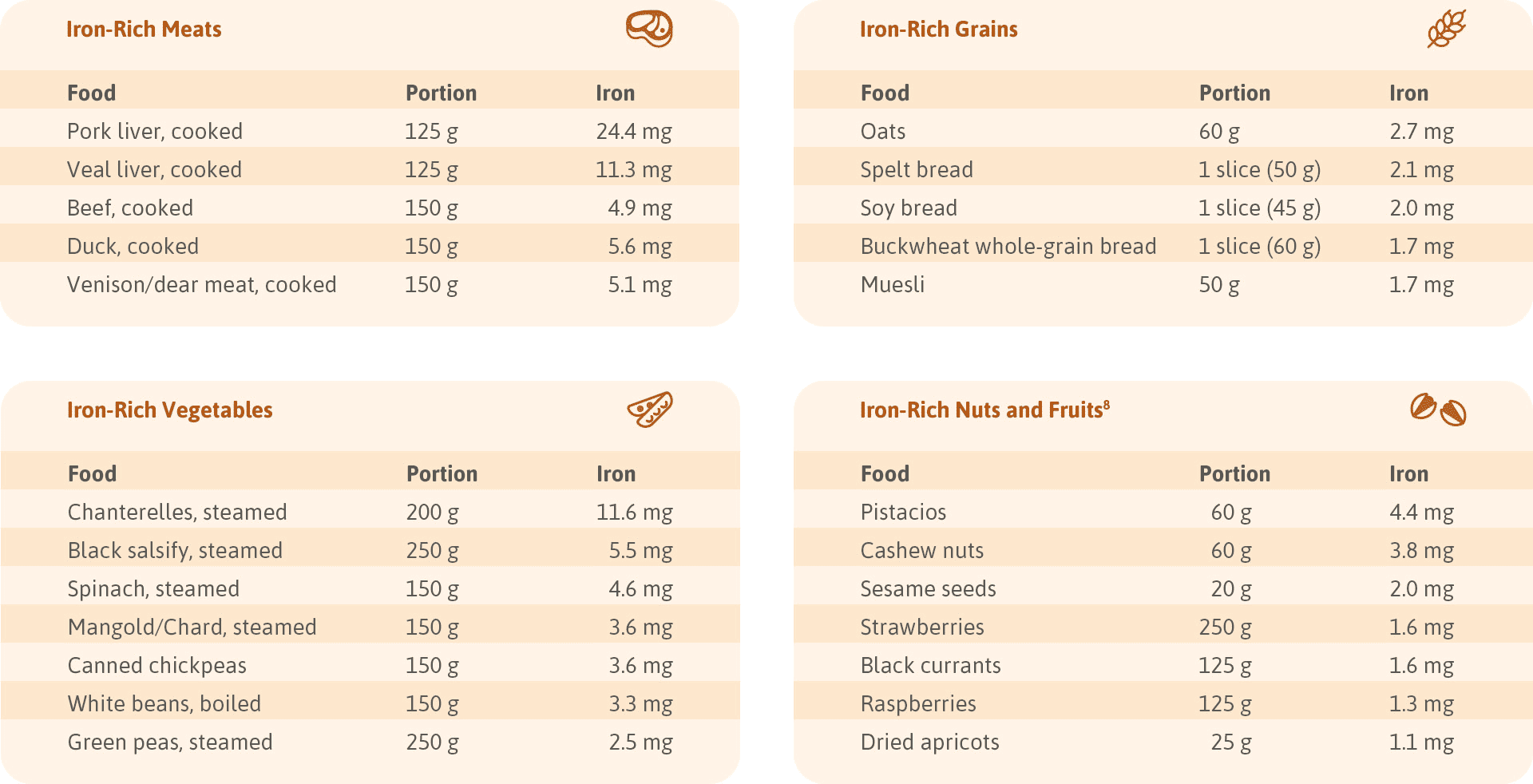
- Balanced, iron-rich diet:
A diet that includes both animal-based and plant-based iron sources supports healthy iron levels. Combining iron-rich foods with vitamin C–rich foods can further enhance iron absorption. - Targeted supplementation:
In cases of pronounced iron deficiency, iron supplements may be beneficial. However, supplementation should always be undertaken in consultation with a physician, pharmacist, or other qualified healthcare professional, as excessive iron intake can be harmful [16].
Quantitative Ferritin Selftest for at Home
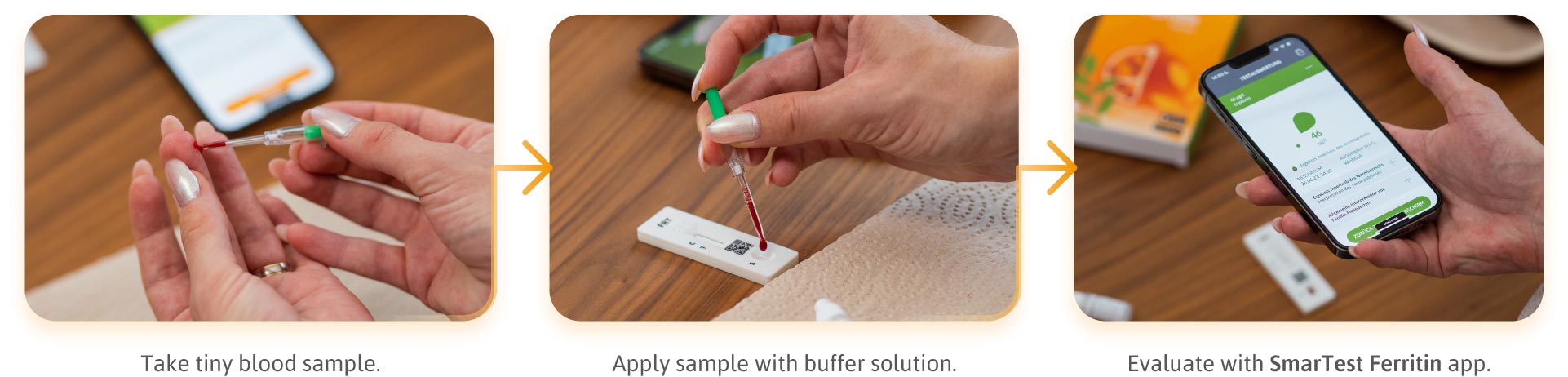
With SmarTest Ferritin Home, you can check your iron stores at home. SmarTest Ferritin Home is a quantitative rapid test that combines a test kit with a smartphone app, that turns the smartphone camera into a lab reader. 15 minutes after performing the test, the test strip is evaluated digitally via the app, by scanning the test cassette. Result will be displayed inmediately in the app, without sending samples to a laboratory or waiting times. The SmarTest Ferritin app also allows to store results, track them over time and to share them with a healthcare professional if needed.
Best Foods to Counter Iron Deficiency With
Nutritional Chart