Why Iron Matters in Sports and Excercise
Iron is an essential trace element that plays a central role in oxygen transport, energy production, and muscle function. For athletes and physically active people, maintaining healthy iron levels is especially important, because intensive training can increase the risk of iron deficiency. Over time, deficiency may affect endurance, recovery, and overall performance and can develop into anemia [1]. Regular ferritin testing at home can be useful for anyone who trains consistently.
Iron Supports Oxygen Supply to the Muscle
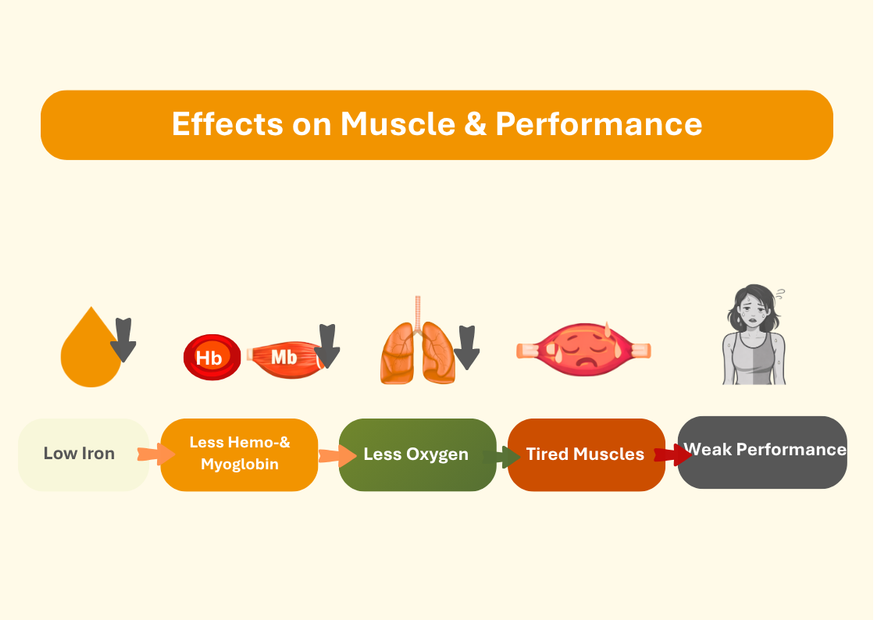
Iron is needed to produce both hemoglobin and myoglobin — two proteins that are essential for oxygen use in the body. During exercise, the body’s demand for oxygen rises. Without enough iron, the body cannot produce these proteins efficiently, which means oxygen transport and storage become less effective [1].
Hemoglobin vs. Myoglobin: What’s the Difference?
A clear myoglobin vs. hemoglobin comparison helps explain why low iron can affect both endurance and muscle performance:
Hemoglobin is found in red blood cells. Its main task is to transport oxygen from the lungs to the organs and muscles. This is especially important during physical activity, because working muscles need a steady oxygen supply. The body’s demand for oxygen rises. If too little iron is available, the body produces less hemoglobin, and less oxygen can be transported through the bloodstream [8].
Myoglobin, by contrast, works directly inside the muscle. It stores oxygen locally and releases it when the muscle needs a rapid supply during exertion [9]. So while hemoglobin moves oxygen through the body, myoglobin helps make sure oxygen is available exactly where and when it is needed most: inside active muscle tissue during for example contractions.
The Function of Myoglobin in the Muscle
Myoglobin is found in skeletal and cardiac muscle, where oxygen demand can rise sharply during physical activity. It is an iron-containing protein that acts as the muscle’s local oxygen reserve. Myoglobin takes up oxygen and holds it directly in muscle tissue so it can be released quickly when demand rises — for example during sport, sprinting, strength work, or endurance training. Since myoglobin also depends on iron, iron deficiency can impair oxygen availability in the muscle itself [9].
Low Iron Leads to Tired Muscles
When iron levels are too low, the body may produces less hemoglobin and myoglobin. As a result, less oxygen reaches the muscles and get tired. That can lead to overall fatigue and lower exercise capacity [1] [2].
How Iron Deficiency Affects Physical Performance
Athletes and physical active people face a higher risk of iron deficiency [1] [3]. This can affect performance in several ways:
- lower endurance
- earlier fatigue
- reduced oxygen transport
- slower recovery
- reduced training capacity
Endurance athletes such as runners are particularly vulnerable, as are vegetarians and vegans among them, because plant-based non-heme iron is absorbed less efficiently than heme iron from animal sources [1] [3]. Altitude training also increases iron demand, because the body increases red blood cell production [3].
Causes of Iron Deficiency: Athletes & Physically Active People
There is rarely just one reason for iron deficiency when excercising regularly. In fact, it’s often several factors that overlap:
- Increased iron loss: Iron can be lost through sweat, gastrointestinal bleeding, or hematuria (blood in the urine) during intense training [3].
- Reduced iron absorption after exercise: Hepcidin is a regulatory hormone that can temporarily reduce how much iron the body absorbs from food [3] [6]. After training, hepcidin levels rise which reduces iron absorption capacity.
- Low dietary intake: Athletes who do not consume enough iron-rich foods risk iron deficiency. This risk is higher with vegetarian or vegan diets [3].
- Altitude exposure: Training in hypoxic conditions increases the body’s need for iron because red blood cell production rises [1] [3].
Typical Symptoms of Iron Deficiency
- fatigue
- reduced concentration
- slower recovery
- reduced physical performance
- decreased training tolerance
Low iron can also cause joint and muscle pain: insufficient stores have been linked to contributing to musculoskeletal discomfort even before anemia[10]. In advanced cases — mostly when a deficiency developed into anemia — even daily activities start to feel hard [3].
What Helps Iron Absorption
Knowing how the body best absorbs iron can help improve iron deficiency because diet remains the first line of support. If dietary changes are not enough, supplementation can be considered. However, iron should not be taken in excessive amounts. A targeted supplement plan should ideally be taken with professional guidance, because too much iron can be harmful. Here some tips to correct iron deficiency through diet:
- combining iron-rich foods with vitamin C-rich foods, such as citrus fruits or bell peppers
- avoiding coffee or tea, especially close to iron-rich meals
- being mindful that calcium can interfere with iron absorption
- including a mix of iron-containing foods such as meat, fish, whole grains, legumes, and green vegetables [5] [6]
How Iron Deficiency Tests Help
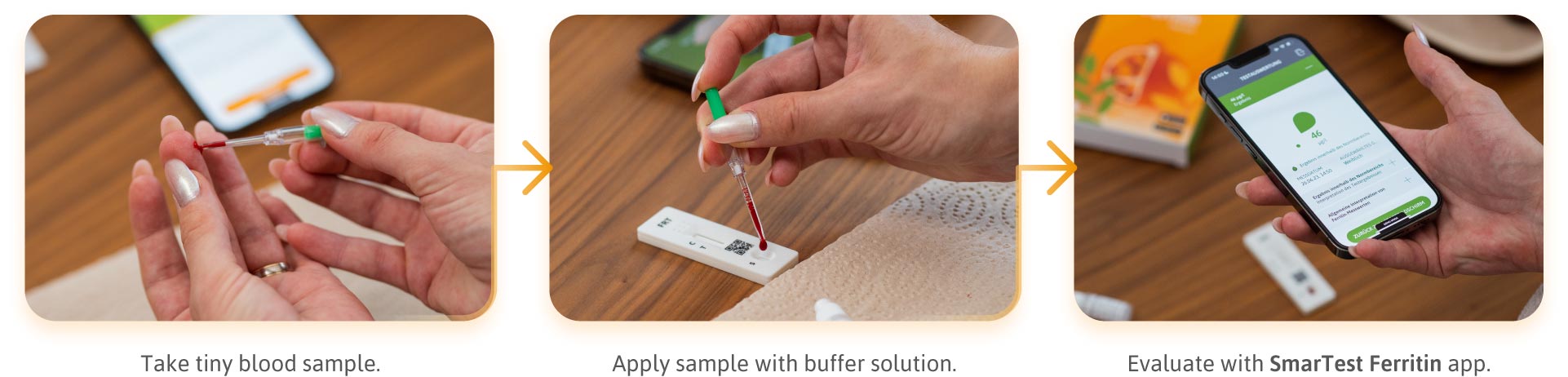
Measuring ferritin levels can be done at home. A ferritin blood test can help identify low iron stores early, often before symptoms become more pronounced. Because ferritin reflects the body’s iron reserves, a ferritin blood test is especially useful for spotting changes in iron status at an early stage. Regular testing makes it easy to track your iron levels over time and act sooner when they begin to fall. A ferritin blood test is one of the most useful ways to detect iron deficiency early, which is why they are often called iron deficiency tests. Because testing can be done at home and repeated regularly, it is a practical solution for anyone who wants a simple and consistent way to keep an eye on iron status during training and recovery. [4] [8].
How to Measure Ferritin Levels at Home
SmarTest Ferritin Home allows users to check ferritin levels at home. The test consists of a rapid test kit and the SmarTest Ferritin app, which uses the smartphone camera to analyze the test cassette. After a 15-minute waiting period, the cassette is scanned with the app, which provides a quantitative result within minutes that is comparable to laboratory analysis. This offers a simple way to measure iron stores and makes it possible to monitor iron status regularly from home, without the need to visit a doctor’s office or send a sample to a laboratory.
Improving Iron Levels: Tips for Athlets and Physically Active People
- Timing matters: Iron is often better absorbed after morning training sessions, because hepcidin levels are typically higher later in the day [6].
- Support with vitamin C: Pairing iron-rich meals with vitamin C can improve absorption [5] [6].
- Watch vitamin D status: A healthy vitamin D level may support both iron metabolism and red blood cell production [7].
- Prepare before altitude blocks: Athletes planning altitude training should make sure iron stores are sufficient before training begins [1].
- Monitor high-risk phases: Heavy endurance blocks, competition phases, or restrictive diets can all increase the need for closer ferritin monitoring [1] [3].
For iron deficiency runners, these strategies are especially important because endurance training places repeated demands on oxygen transport, recovery, and tissue adaptation.
Nutrient Table: Foods Rich in Iron
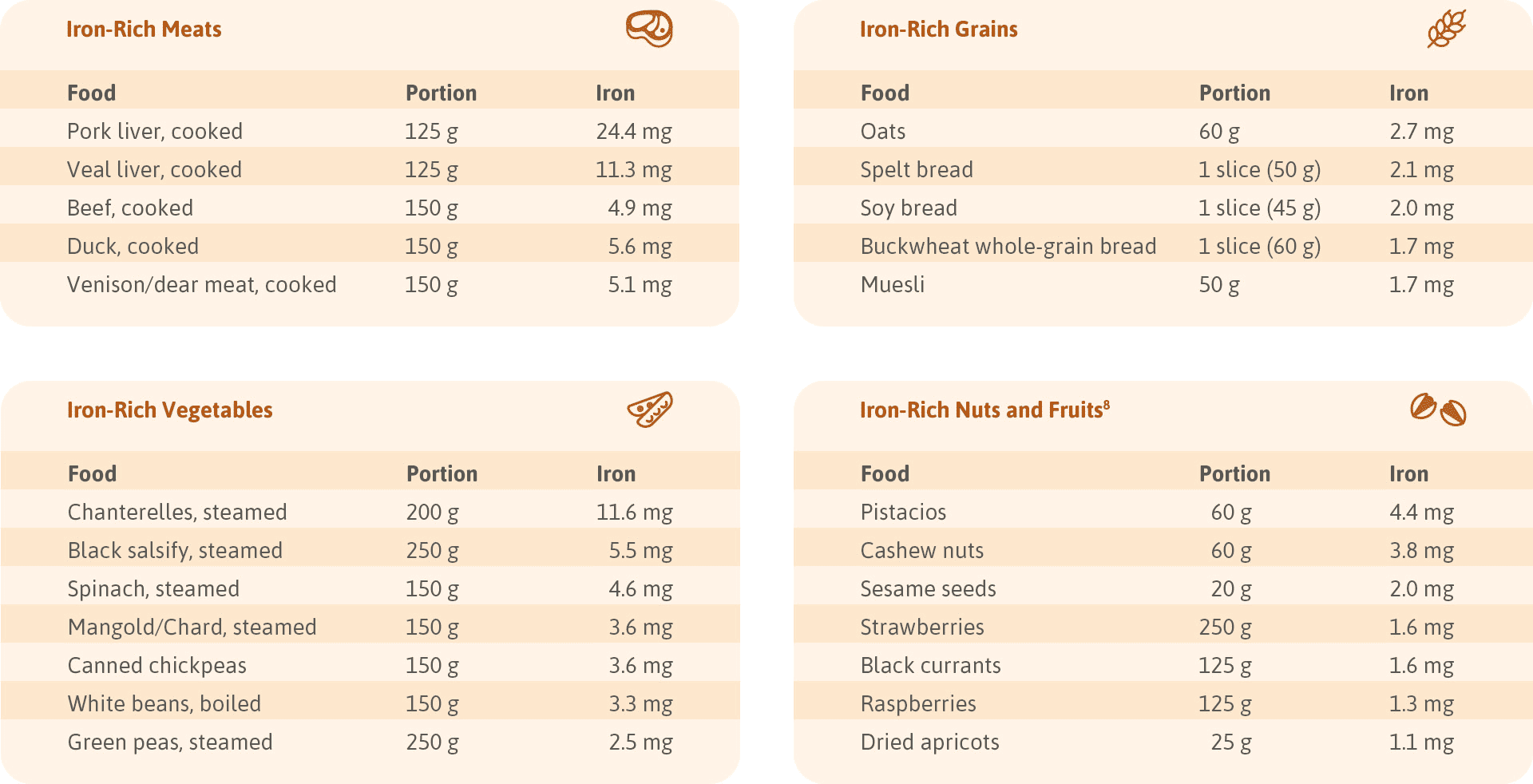
Iron deficiency is one of the most common nutritional deficiencies. It is especially relevant for endurance athletes such as runners, people who train at altitude, and those following vegetarian or vegan diets [1] [3]. Left unaddressed, low iron stores can contribute to slower recovery, reduced muscle oxygen supply, and anemia. A balanced diet, smart nutritional timing, and regular monitoring all help reduce the risk.